
Why Your Evaluation Is Determined Within Your First 90 Days of Working in Japan—Key Points for Foreign Engineers to Keep in Mind
- 2026.06.05
- Utilizing AsianTech.Link
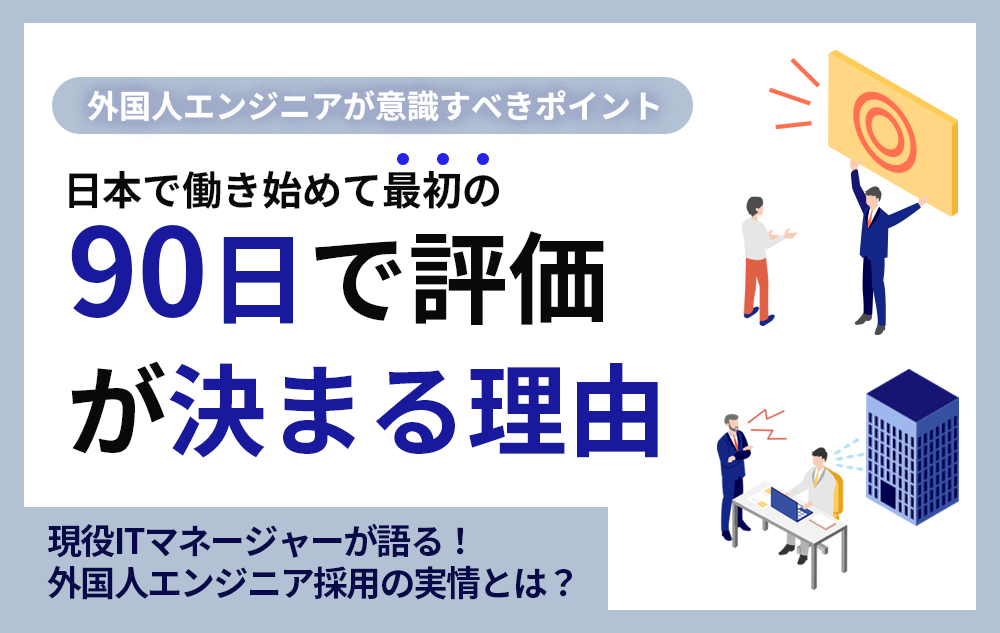
One thing that often surprises foreign engineers when they start working at Japanese companies is how quickly their performance evaluations are finalized. They can’t expect to be given six months or a year; instead, the impression of “what kind of person they are” is formed within the first one to three months. How they spend these 90 days will have an impact on their entire future career.
Why Do Japanese Companies Place Such Emphasis on the “First 90 Days”?

Japanese companies place a high priority on stability in the workplace. They focus on whether new engineers can correctly understand instructions, seek guidance when problems arise, and collaborate effectively with their colleagues. A defining characteristic of Japanese workplaces is the emphasis on assessing these qualities early on.
If an employee is judged during this period to be capable of “avoiding major problems” and “building trust,” their subsequent performance evaluations tend to remain stable. Conversely, if they cause concern during this initial phase, it will take a considerable amount of time to regain trust.
At first, they’re looking at your “approach” rather than your results

You shouldn’t expect to achieve major results right after joining the company. Instead, what will be valued are basic attitudes such as taking notes on instructions and following up on them, meeting deadlines, and not leaving unresolved issues unaddressed.
“Doing the basics with care”—this attitude is the first step toward earning trust in a Japanese workplace.
The ability to report, communicate, and consult is of the utmost importance

The thing most disliked in Japanese companies is “keeping problems to yourself.” Delayed reporting or failing to consult with others is viewed more negatively than technical mistakes.
Share your progress regularly. If you have even the slightest concern, speak up.
Doing just this will earn you a reputation as someone who can be trusted to handle tasks.
A “willingness to verify” is valued more highly than in Japanese

Even if your Japanese isn’t perfect, it rarely results in a significant drop in your evaluation.
What’s more important is whether you can ask, “Is my understanding correct?” or “Could you confirm my understanding?”
More than language skills, it’s your willingness to prevent misunderstandings that builds trust.
We can see that he is making an effort to fit in with the team

In Japanese companies, teamwork is valued more highly than individual skills. Greeting others, expressing gratitude, and responding politely to feedback—these small actions create the impression that you are someone who is easy to work with.
During your first 90 days, keep in mind that you are viewed as a team member first and a technical expert second.
Motivation to learn is demonstrated through “actions,” not “words.”

Simply saying “I’ll study” or “I’ll do my best” isn’t enough to earn recognition. Taking the initiative to look up things you don’t understand, taking notes, and avoiding repeating the same mistakes—these actions demonstrate your commitment to learning.
Foreign engineers are expected to show a strong desire to grow. It is important to meet those expectations through your actions.
If you earn people’s trust in the first 90 days, things will be easier from there on out

In Japan, first impressions have a lasting impact. If you can earn the trust of others within these first 90 days—so that they feel confident in your abilities—you’ll be more likely to be entrusted with work, and a relationship will develop where your colleagues will cover for you even if you make a few mistakes.
- Within 90 days: Build trust through reporting, communication, consultation, verification, and a positive attitude
- 3–6 months: You’ll be entrusted with tasks and receive positive feedback in performance reviews
- After that, even if you make a few mistakes, you’ll be supported, and you’ll become a stable member of the team
Even if you make a few mistakes, your team will support you, and you’ll find your footing as a member of the team.
The first 90 days are not a “period for delivering results,” but a “period for building trust.” This mindset is the key to a long and successful engineering career in Japan.
Summary: 5 Things to Keep in Mind During Your First 90 Days

- Process Over Results: Thoroughly Emphasize Confirming Instructions, Strictly Adhering to Deadlines, and Never Leaving Things Unattended
- Reporting, Consulting, and Communicating: Frequent Updates and Early Consultation Are Key to Being Trusted
- A Proactive Approach to Confirmation: A Single Word to Prevent Misunderstandings Is More Valued Than Formal Japanese
- Teamwork: Greetings, Expressions of Gratitude, and Polite Interactions Shape the Workplace Atmosphere
- Demonstrating a Desire to Learn Through Action: Actions Like Researching, Taking Notes, and Avoiding Repetitive Mistakes Speak Louder Than Words
Demonstrating a Desire to Learn Through Action: Actions Such as Researching, Taking Notes, and Avoiding Repeated Mistakes Speak Louder Than Words

When you first start working as an engineer in Japan, it’s natural to feel anxious and nervous.
However, the key things to keep in mind during your first 90 days are simple: report, confirm, and demonstrate a willingness to learn through your actions.
Simply by sticking to these three principles, your standing within a Japanese company will naturally become more stable.
Taking that first step carefully is the key to building a long and successful engineering career in Japan.
Let’s explore your career in Japan together

Whether you have concerns before joining the company or worries after you start working, the AsianTech.Link support team is here to help.
Why not take the first step by simply registering?
Author Profile


Related Articles
-
2026.04.20
What’s it really like to work as an engineer in Japan? An honest account from a Vietnamese engineer in his third year in Japan
- Recruitment and Interviews
- Utilizing AsianTech.Link
-
2026.04.20
What Hiring Managers Really Think! What Are Japanese Companies Looking for in Foreign Engineers During Interviews?
- Utilizing AsianTech.Link
-
2026.04.20
[Essential Guide] What They’re Really Looking For in Japanese Engineering Interviews!
- Recruitment and Interviews
- Utilizing AsianTech.Link